
From the First Moving Images to AI Cinema: Film’s Next Era
Cinema began when images learned to move. Today, AI is opening a related frontier: a more fluid way to imagine, test, and shape stories. The future will not belong to machines alone, but to creators who pair human judgment with new forms of cinematic possibility.
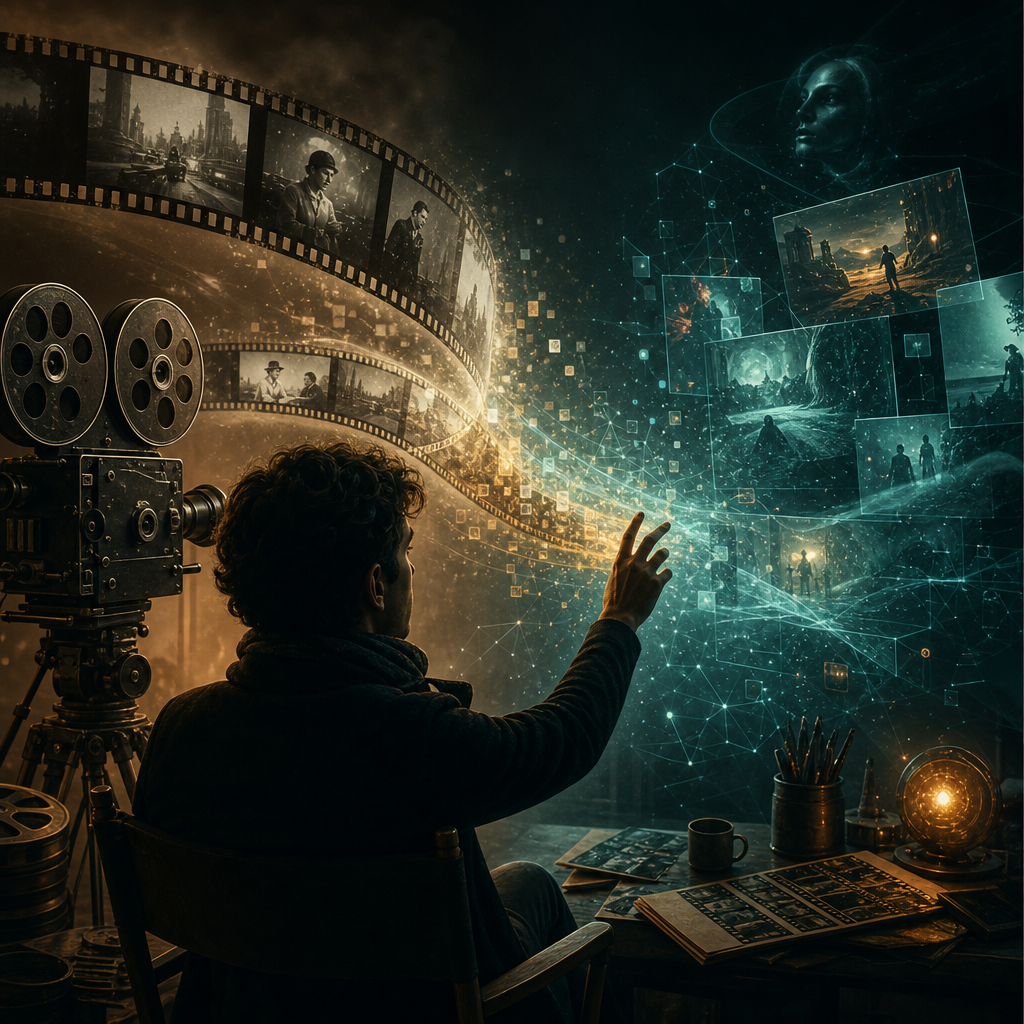
Cinema has always been shaped by changes in how images are made.
When early motion-picture experiments transformed still photographs into moving images, the change was more than technical. Movement introduced a new artistic language. It changed how stories could unfold, how audiences could experience time, and how creators could think about performance, editing, space, and emotion.
More than a century later, filmmaking is approaching another foundational shift. Artificial intelligence is beginning to make visual development, experimentation, production, and post-production more fluid. Like the arrival of moving images, this transition is not simply about a new device or software category. It is about expanding the creative vocabulary of cinema.
When Images Began to Move
Before cinema, visual media could preserve a moment, present an illustration, or document a person and place. Moving images introduced continuity, rhythm, and transformation. A filmed gesture could become a performance. A series of frames could become a scene. Editing could connect locations, perspectives, and moments that had never existed together in physical space.
The first filmmakers were not only operating cameras. They were discovering what cinema was capable of being.
That discovery unfolded through experimentation. Creators tested framing, motion, staging, light, cuts, and effects. Many of the conventions audiences now associate with film were developed because artists explored the possibilities of a new medium before its rules had fully formed.
AI cinema is entering a similar period of discovery. The technology is not merely making familiar production tasks faster. It is changing how creators can move between an idea and a visible, discussable version of that idea.
From Fixed Stages to Fluid Development
Traditional filmmaking often requires creative decisions to pass through a long sequence of stages. A concept becomes a treatment, then a screenplay, then visual references, planning documents, rehearsals, production, editing, and finishing. Each stage is valuable, but changes can become increasingly expensive as a project advances.
AI-assisted workflows can make some parts of this process more iterative. A filmmaker may be able to explore a visual direction, test a tone, or compare possibilities earlier in development. A screenwriter or creative producer can use visual exploration to clarify the emotional and spatial identity of a project before committing to every production decision.
This does not remove the need for craft. It can make the conversation around craft more concrete.
Useful questions can emerge sooner:
- What does this world feel like, beyond its plot description?
- Which visual choices support the character’s inner life?
- Does the proposed tone match the story’s subject?
- What should remain ambiguous, restrained, or unseen?
- Which ideas deserve further development, and which should be discarded?
The ability to test more possibilities can be especially meaningful for independent creators, students, and small teams. It may allow ambitious ideas to become visible during their earliest stages, when feedback can still shape the work rather than merely approve or reject a finished plan.
The Creator Remains the Center
The most important question is not whether AI replaces filmmakers. It is how AI might expand what filmmakers can imagine, test, and bring to life.
A machine can generate possibilities, but a creator gives those possibilities meaning. Human direction remains essential in deciding what a story is about, whose perspective it represents, what emotional experience it seeks, and why a particular image belongs in the work.
Taste is not a decorative layer added after production. It guides every meaningful choice: the distance of the camera, the pace of a cut, the tension between sound and silence, the cultural references a project draws upon, and the details it refuses to flatten.
For this reason, AI-assisted cinema should be understood as a collaboration between intention and iteration. The creator establishes the purpose and evaluates the results. The system can help widen the field of possibilities, but it does not determine which possibility is honest, necessary, or artistically alive.
A New Set of Creative Responsibilities
A broader creative field also brings serious responsibilities. Questions of authorship and originality become more complex when images can be developed through machine-assisted processes. Consent matters when people, likenesses, performances, or recognizable creative identities are involved. Labor matters when production practices change. Bias matters when systems reflect limited or distorted patterns of representation.
These concerns should not be treated as obstacles outside the creative process. They belong inside it.
Creators and producers will need to develop clear habits around:
- Defining who has creative authority at each stage.
- Reviewing generated material for cultural assumptions and representational harm.
- Protecting consent and respecting the identity of real people.
- Distinguishing exploration from a final creative decision.
- Keeping human judgment visible in the development of a project.
The emerging language of AI cinema will be shaped not only by what the technology can produce, but by the standards creators establish for using it well.
Qaivid and the Next Cinematic Workflow
Qaivid belongs to this transition as part of a creator-centered approach to AI-assisted filmmaking. Its role can be understood through a simple connection: creative intent should remain linked to the tools used to explore and develop it.
That connection matters because cinematic work is rarely a single act of generation. It is a sequence of questions, revisions, comparisons, and decisions. A useful platform should support that movement without turning the creator into a passive observer of automated results.
For independent filmmakers, video creators, screenwriters, creative producers, and students, the promise is not a shortcut around storytelling. It is a more accessible space for trying ideas, identifying possibilities, and refining a project’s visual direction.
Cinema’s Next Language
Every new medium begins with uncertainty. Early cinema borrowed from theater, photography, and everyday observation before developing forms that were distinctly its own. AI cinema will likely pass through a similar period, combining familiar filmmaking practices with new modes of visual experimentation.
The creators who shape this next era will not simply be those who use the most advanced systems. They will be the ones who bring strong questions, cultural perspective, patience, and discernment to the process.
Cinema began when images learned to move. Its next transformation may come from making the path between imagination and iteration more fluid. The opportunity is not to surrender authorship, but to deepen it—to give more creators the ability to explore boldly, revise thoughtfully, and bring meaningful visions into view.